HOW I HEARD THE GLORY
At their peak, no one was better than Television. No one wrote better songs than Tom Verlaine, and no one gelled as a musical foursome quite like Tom, Richard Lloyd, Fred Smith, and Billy Ficca. (And original member Richard Hell was no slouch, either). That’s what I believe. Marquee Moon is my single favorite album of all time.
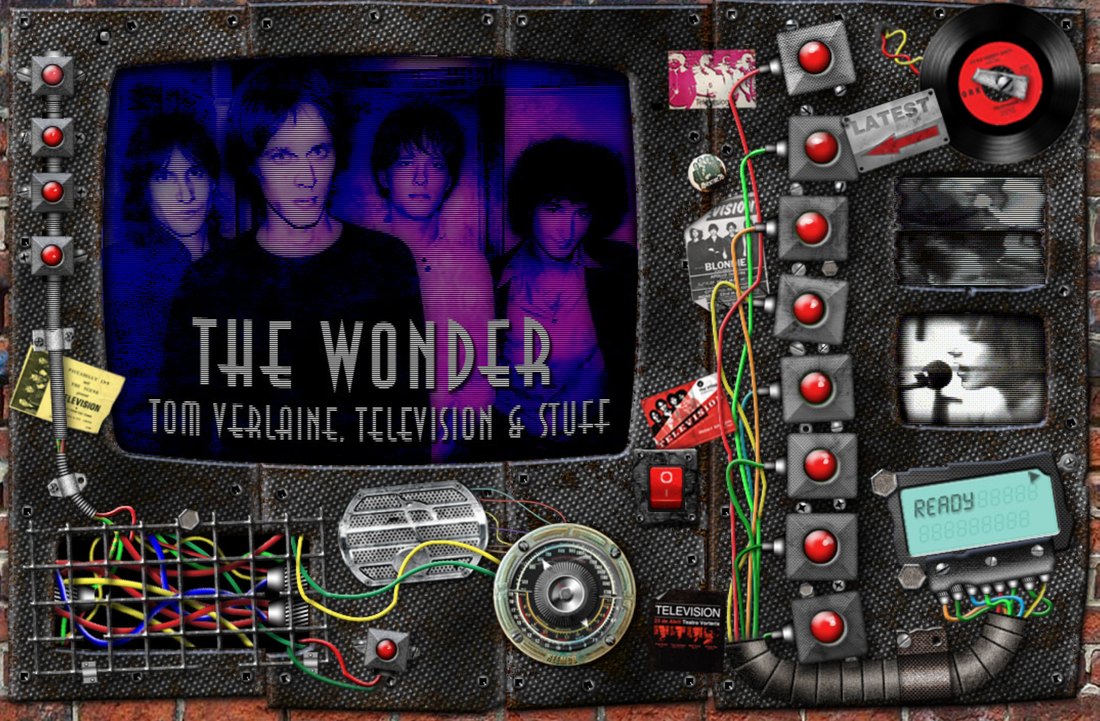
The Wonder is a website dedicated to Television and its individual members – their work together and their careers apart, from 1973 and the Neon Boys up until the present day. The Wonder was the product of many years of work and dedication by Keith Allison. Keith wrote and organized thousands of lines about Television, curated countless images (and produced quite a few himself), sifted through dozens and dozens of setlists, and collaborated with fellow fans like me to build and run The Wonder over a period of 20+ years. Sadly, Keith left us in November of 2023, but his words and work can be found all over this website today. It wouldn’t exist without him.
Television is also my favorite band of all time. How did I get turned on to them? I didn’t see them back in the day. I was born a few months after they played their first few gigs in March of 1974, in fact. It wouldn’t be until the summer of 1993 that I got switched on to them, and it happened because a friend played me “Holidays in the Sun” (the Sex Pistols song) during a trip home during my freshman year of college. Until that time, I’d spent the preceding few years with the music of my era – alternative, indie, grunge, even industrial – although I’d grown up with an older brother who’d instilled a life-long love of The Beatles and other 1960s/70s acts in me, too. And I spent a formative year working in a video store with an “oldies” playlist I’d learned to love (back when “oldies” started with Buddy Holly and ended around the time of “Good Vibrations”). But the Sex Pistols really grabbed me, and over the summer it led me to Jon Savage’s England’s Dreaming, a “definitive history of punk, its progenitors, the Sex Pistols, and their time: the late 1970s,” in an effort to determine where that raw, authentic sound came from (I was a History major in college!). I read Savage’s book – it’s just OK, honestly – but the discography it included was life-changing. Here, Savage built out a listening list running from Robert Johnson to Elvis Presley to Pere Ubu and Public Enemy. I used that discography as a shopping list for years to come, and I can’t begin to count all of the records I love today that I found through it. It even led me to revisit and reevaluate the catalogs of bands I knew, but wasn’t deeply familiar with, like David Bowie and Talking Heads.
I spent the summer of 1993 working two jobs, six days a week. But on my free day, and most evenings, I’d trawl the record stores of Boston and Cambridge, Massachusetts for albums I’d read about. One night, I brought home CD copies of Marquee Moon and Blank Generation. Richard Hell’s disc was instantly accessible to me, and a rapid favorite. Marquee Moon took a bit longer, but by the fall, I was fully converted, quickly laying my hands on Adventure, the 1992 Television LP, and The Blow Up. Clinton Heylin’s From the Velvets to the Voidoids also came out around this time, giving me another fantastic discography to explore, and the best history of Television available at that time, too.
My incipient love for Television was only mistimed in that I’d completely missed their 1992–93 reunion tour. They’d even played a gig on my college campus in the fall of 1992 that I’d missed! But it was well-timed for the birth of the Internet, and a way to connect with people of niche but shared interests all over. Within a few years I’d managed to connect with other fellow fans around the world, including Keith Allison. Those fellow fans helped me find my way to countless Television live tapes and solo albums that weren’t always easy to find in the mid-1990s. Many of those fans have formed part of my “Television circle” right up to the present day. And many of those same people have helped build up The Wonder over the years.
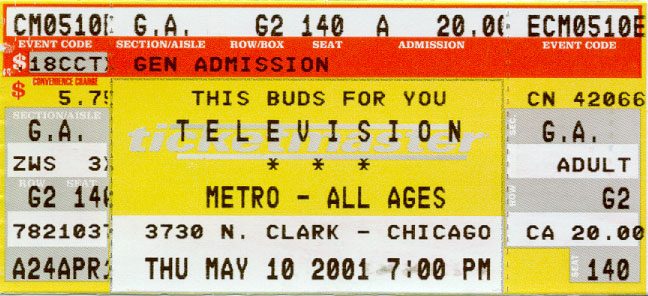
In 1998, I launched the Marquee Moon Mailing List. Today, that list continues on as a Facebook group, and is frequented by a devoted community of Television fans around the globe (as well as musicians, songwriters, and even some members of the band itself). In 1999, I had the chance to see Tom Verlaine live (with Jimmy Rip, as part of the “Music for Films” project), and in 2001, on my birthday, I finally saw Television live at the Metro in Chicago. I’d go on to see Television several more times over the next few years in NYC, and one final time – with Jimmy Rip having replaced Richard Lloyd – a few days after my birthday, in May of 2014.
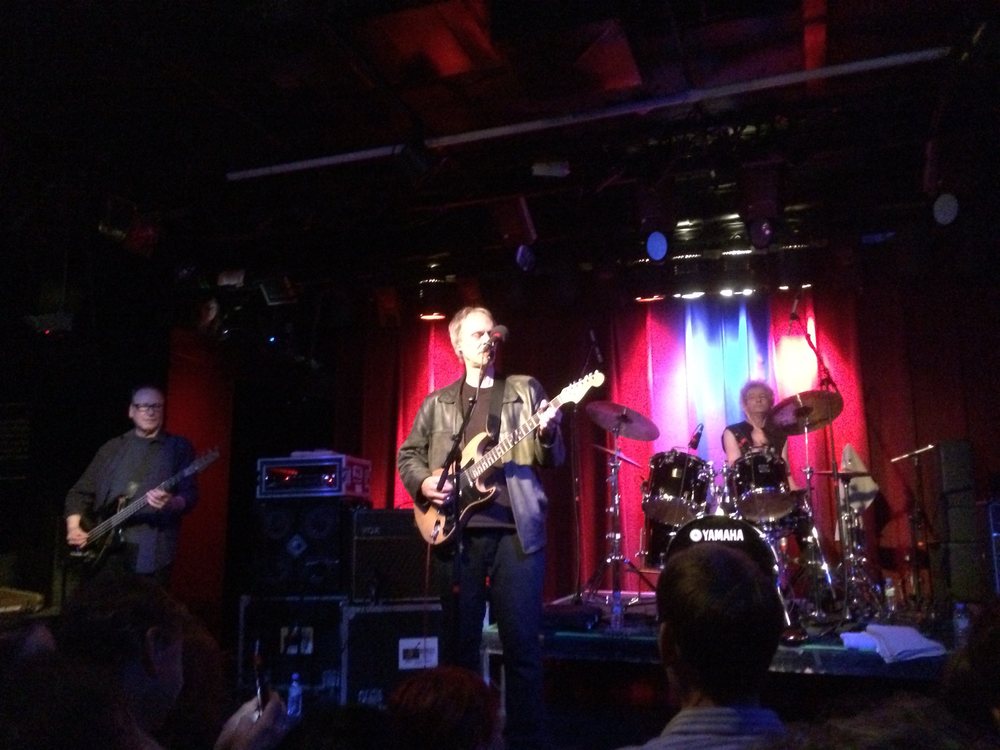
Television isn’t around anymore. Their final show was in February of 2020. But their songs continue to be covered, their influence is regularly and widely cited by musicians and songwriters, and efforts like Jimmy Rip’s TMOTV group (The Music of Tom Verlaine) keep the music alive and playing. In the meantime, we’ll always have their albums (official and otherwise) and their solo careers to enjoy. The Wonder is here for all of our fellow fans, whether they first saw Television in 1974 or just read about Marquee Moon for the first time 15 minutes ago. And I’m continuing the work Keith began, collecting news, adding setlists and photos, updating the discography and gigography, and more.
One very important thing to add: Keith didn’t build this site alone. Countless fans helped out by submitting their historic scans, corrections, edits and content, including Steve Rovner, Leo Casey, Howard Webb, Raymond Gorman, Maurice Rickard, Joe Kingman, Andrew Russ, and doubtless others I don’t even know about. And by all means, if you have something to contribute (or correct) please email me and let me know.
In the meantime, regardless of how you got here – maybe in a Cadillac pulling into a graveyard, or through a field of crosses, or a field of fire – welcome!
Phil Obbard
October 2026
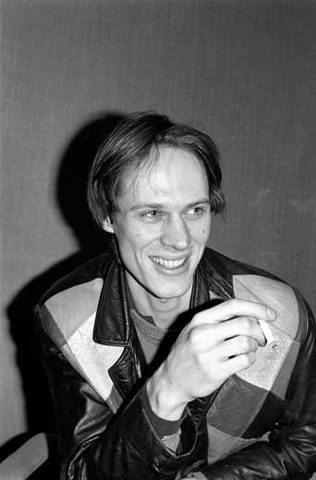
Tom Verlaine
I’ve got a quote for you, a good quote to describe Television...In madness there is order.
If people listen to, you know, Fleetwood Mac – they’re going to think our first record was grating. There’s all guitars, no sweet harmonies, I mean sure. They’re just going to hear it as like exhausting or something,. I mean I like that about our records. I think a record should exhaust you by the time it’s done, otherwise it’s not even worth the seven dollars.
I can't presume to speak for the others, but I never felt anything negative from anyone when I was onstage with Television. When I played rhythm behind Lloyd, the only thing that concerned me was to push him as hard as I could so that he'd go beyond what he was capable of and come up with something new, and vice versa. That's the only thing that mattered.
Everybody's out trying to be commercial. I'm not trying to be anything, really.
You know, there is something I'm looking for when I'm writing. But I couldn't tell you what that is.
People ask me this a lot, what a song's about.... I do think analyzing a song can be interesting, although it doesn't necessarily get to the point. It's a whole other side activity. I do like making a thing into pictures. If I get an abstract idea and all the words in it don't represent tangible things, I might try to take the idea and make it into a picture, create a little scene there, an image.
There were a lot of things I listened to, but so-called pop music never killed me, you know, the type of stuff that always seems to make it on the radio. The whole radio thing seems so… it's like they've accepted the whole "new wave" thing only because this kind of pop element came into it. In Europe they really love emotion, but here it's like, "let's stay away from it because we might cry or something".
I have a real soft spot for flying saucer songs and Frankenstein songs. When I was a kid the first record I ever really liked was called "The Mummy", and the flip-side was called "The Beat Generation" which Richard Hell later re-wrote as "The Blank Generation". I thought it was the greatest thing I had ever heard. I didn't like Elvis much then, but I was very young. When I was a kid I used to play that monster all the time!
As peculiar as it sounds, I've always thought that we were a pop band. You know, I always thought Marquee Moon was a bunch of cool singles. And then I'd realize, Christ, this song is ten minutes long with two guitar solos.
They do tend to rhyme, though. As corny as they are, I really like it when songs rhyme.
We're also opposed to the trends in uncommercial rock. I don't see our style as different from any number of so-called successful rock groups... You name 'em - you name the successful rock groups...that's what I'm talking about. I don't think we're so different from any of them.
I think amongst the guitars, it's a liking for the same kind of tones, so you don't have one guy playing twang and the other guy playing with a fuzz tone. So, right away, the two guitars have a kind of "band" sound. It's not that far off from '60s bands, really, like Yardbirds or early Rolling Stones, where sometimes the two guitars sound like one big guitar weaving back and forth. With Fred it's a simplicity thing - he doesn't play very complicated parts, which help the guitars poke out more. And with Billy, it's like he has an incredibly broad background in drums. He and I used to play sort of quasi free-jazz stuff in the '60s. So he has this really wide background of different styles.
Well that's what Eno's tape sounded like to tell ya the truth, when Eno did us we sounded like The Ventures! And it wasn't bad on one of the songs, but on all 8- Euchh! No balls, no balls...
I don't think anybody thinks about their past much, unless they're in a mental institution.
Places like Belgium and the south of France, Sweden and Copenhagen are really alive. They really love rock 'n' roll, they really respond.
The Beat thing happened when I was younger. I used to run away from home, inspired by the Beats, like in '64 and '65.
I've only heard one person call me pretentious and he was a guy who auditioned for the band and later became a rock critic for High Fidelity Magazine.
My non-career. My excuse for a career? Honestly, I never think about the word ‘career.’ I’ve had managers, the minute they say it to me, they look at me and just roll their eyes.
I heard a side of it - or maybe the whole thing - once. I didn't think much of it. There were a lot of old Tom Verlaine chord changes on it, but I don't care 'cause we're not doing them anymore anyway.
I don't say that out of conceit. I just heard it right away - I don't even think he's aware of it. Actually, I don't care.
I'm kind of proud of that little record! I mean I've heard about a million other records that have come out since then by all these groups around here and there and I really like 'Little Johnny Jewel'.
Johnny Jewel is how people were maybe two hundred years ago. Back then, when people got up in the morning, they knew what they had to do to get through the day - there were 100% less decisions. Nowadays, we have to decide what we want to buy in grocery stores, what job to take, what work to do. But not Johnny. For him, it's all right there - it's a freer state, and that's what my music is looking for...
... To understand Johnny, you should think of William Blake. He was the same kinda guy.
I don't want any production credit. I think producers are overrated. They're for people who, first of all, don't know anything about music or arranging and have no ear for their own doings. They can't tell a good solo from a bad solo, stuff like that.
(On playing Glastonbury Festival)
Frankly, it will be a hilarious way of coming back. There's no soundchecks and it will be us just winging it to an enourmous number of people. How can anybody take a band seriously that hasn't played for 14 years and is going to do a festival without a soundcheck?
In terms of the solos, I don't come at it from an instrumentalist's point of view. I can't imagine why anybody would want to learn how to play somebody else's solo, but I guess that's how a lot of guitar players come to it. Whereas I had - maybe it was the misfortune - of taking piano and saxophone for years.''
I'd never assume an audience was anything but totally receptive and perfect. Seriously, it seems to me that's the only circumstance you can work under. Otherwise, speaking for myself, you may as well be in the advertising business.
Yeah, I'd say there's probably about a couple of hundred people I admire - but that has nothing to do with what a person does themselves. That's why I never mention these things. You can read a detective novel you really like, but it had no bearing on what you do yourself, you just think, "God, how this guy wove this together!" Or you get into the energy of it. Or you see a poem which makes a great statement about sentiment, but it's not sentimental.
Practice? I never practice. I just write songs and take solos.
I always like junkyards. All this metal piled up - they're filled with pathos, those places. Much more pathos than most of the music I've heard. You look at it, and there's more feeling, even though it's depressing, than there is in a lot of music I hear these days. A junkyard is what it is, whereas listening to a record by, say, Styx, is something else.
I've seen a lot of people getting into Jazzmasters because of me, and, well, people don't know what they're in for. I mean if you're looking for endless sustain, you're going to have to get it out of your hands (laughs). Because a saxophonist gets it out of his breath. You've got to work for it on the guitar - it means you have to pull it out of yourself, otherwise, what are you doing? You end up playing a lot of noise or scale exercises.
I recently realized that Television has influenced a lot of English bands. Echo and the Bunnymen, U2, Teardrop Explodes - it's obvious what they've listened to and what they're going for. When I was sixteen I listened to Yardbirds records and thought, "God, this is great." It's gratifying to think that people listened to Television albums and felt the same.
I'm not even sure who my audience is.
I just don’t like people coming up to me and saying something. It immediately makes you become insincere. There is no way that you can react to it sincerely. I really don’t have that much interest in stardom.
I was just listening to some of the stuff over headphones and I really like the way Richard does his guitar stuff - it sounds real random! I'd always loved his chord work, he is one of the chord guys. Townshend is also one of the chord guys I admire. I actually like rhythm guitar more than lead in a certain way. I love playing rhythm guitar!
Pablo Casals said that "the desire for innovation leads to greater aberrations in art than would acceptance of what's already there" and I think he's definitely got a point.
......
Style to me is incidental. The British are very adept at creating it for its own sake, but the best style is incidental. John Coltrane had a style but it was totally incidental to what he was.
In Old English they don't say I had a dream, but there's another usage of the word - "life is but a dream," to be corny about it. It's implied with eyes wide open, rather than asleep. But I'm not a philosopher to explain myself. I wish I could. Maybe that's why I'm a musician.
You can't get so interested in just making sounds. The point of it all is some kind of expression.
I'm not a clown but I'm not an academic either.
I like thinking of myself as invisible. I find it a very advantageous way to live.
With my records, it's just a matter of trying to create something fresh for myself in a very finite context, which is the pop song. I don't know anything about the people who buy my records, and what, if anything, they get out of them.
(on getting arrested for speeding without a license)
They couldn't believe someone could be so stupid. The judge asked what I did for a living. I said, "Well, I write songs." He said, "Well, I guess you got a new song here, don't you?"
When I think of 'influence', I think of 'influenza', like somebody's picked up a germ.
I always thought I was commercial. I always thought I was writing hit singles. These days, whatever's on the radio is considered commercial. People like what's on the radio, whatever it is.
(on Warm and Cool)
But it's not really a rock record. It's kind of bluesy. There's also something Fifties about it, and something -not in terms of sound but concept - sort of Oriental, in the sense of keeping it incredibly simple and leaving lots of space.
The whole reputation of being a rock guitar player, I could really care less about it. Still, when I hear new groups today I do occasionally hear something where I think... ahh, I've heard that lick before.
We're not really together, as you can see, just want to break the world record for longest time in between albums.
We haven't changed, the time between the songs is longer than the songs.
I can't remember ever being really bored. I find life very interesting, actually. I think some other musicians are always looking for something to give them an idea, but I find I have to reject 90 percent of my ideas because they don't live up to some self-imposed standard. That's also why I don't make a record once a year. I throw so many things out, and I have to have something to say.
I write a lot of more instrumental music than I do vocal music. It's because I come out of a background of playing piano and then playing sax for a number of years. I kind of got into rock backwards. A lot of guys go into rock and then get sick of it and then go into something else. I came the other way, so I've always just had a lot more stuff lying around.
Boogie! I hate boogie, God, I mean, not the Chicago boogie like Willie Dixon or Howlin' Wolf, but all those awful white bands…
Well, I worked in a sheet metal factory once and scarred my wrist from the cuts. I found a sympathetic psychiatrist who told the draft board I was insane. We used the scars as proof of a suicide attempt.
I told somebody in Europe I was 43. I never tell my true age. It's ridiculous that people ask. The press doesn't deserve anything but lies.
I don’t think Marquee Moon was so good, y’know? Just another record. First records everybody likes a lot.
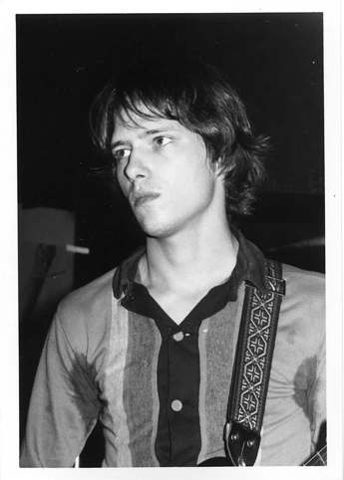
Richard Lloyd
Can I just say that if you asked me, I'd say Television was a lousy fuckin' name for a rock group.
Television was the only band of its ilk that treated the guitar with delicacy, not as simple rhythm support for teenage aggression.
Some bands don't ever get along and they do fine. Some relationships are built where there's an incredible tension. [Television is a] musical experience of great strength, but that doesn't mean you all have to play poker on Friday night.
Television was one of those magnificent kind of events where everything fell into place.
We're an analog band, we're not digital... When things come out on CD they have to be digitalised. There's a good engineer I know who says that analog is like film and digital is like video. If you put something you've filmed on video then it will retain all of its beauty and sheen of film. If you record something on video it will be grainy, and if you put that on film it will retain its graininess. We're analog... valve. We're valve people, not solid-state people.
Some of the albums I like best in the whole world are considered psychedelic albums. A psychedelic album is an album that when you put it on, if you listen to both sides, when it's over, your perceptions have been changed and I think that our record can do that.
I think it's mood-evoking in a way that the voice starts to come in and then just fades away. It gives you the conception that the song never really ends.
They were recorded without processed cheese. Listen to old '50s records. The style may be dated, but the recording isn't.
Rock is stronger than any misguided theories of cultural events. It's bigger than that.
Thanks to MTV, half the population of the western world thinks they're going to be rock musicians. In Hollywood at 8.30 AM you literally see all these long-haired rock and rollers with guitars, like businessmen with briefcases, going to this guitar college where they all learn speed and thrash and tapping. And it's like, 'oeyyyyy'! All the 64th notes make you king. You wonder where all those guys are headed, since 99.9999 percent of those guitars are eventually going into the closet!
......
I purposely didn't learn any of those hip licks. There's a million guys technically better than us but there's something else that makes you a musician rather than just a guy who plays an instrument. The real criteria for success is inexpressible!
Some-one called my style 'sense of urgency' guitar playing and I've always admitted I often don't know where I'm going when I solo. But that desperation is what makes it exciting.
I am not a punk rocker. You've got it mixed up. Nobody is a punk rocker. Punk rock is just a label. It wasn't part of our ethics. The whole idea was that we were trying awfully hard to become good at our instruments. What you're talking about is the "anybody can be in a band, you don't have to know how to play your instrument" mentality, which is really an English idea. It's a social, political rebellion. It had nothing to do with Americans.
I'm a classic middle '60s fan of the moment where electric guitars went centre-stage with Hendrix, Beck, Page, Bloomfield. I followed the English invasion bands back to the Americans and ended up in the blues. Buddy Guy is an all-time hero. Tom wouldn't say that.
A song sort of defines itself. Tom's like an editor: I might have a part, and he'll ask me to play inside-out or backward, or move two bars behind. Same with the drum beat: Billy will be just playing, and then Tom will come up with an idea, and a song falls into place. That's how it works. You'll have a part, find a sound, then the part isn't right anymore and the other part has to change.
The guitar is like a cuisine and you can't expect people to eat the same thing all the time.
To me, the coolest riffs are composed of two guitar parts that interlock like gears. You need both parts to make whole. I work things out on an electric that's not plugged in to make sure a good tone isn't forgiving a part that couldn't stand up naked. Only after the parts are written will I struggle to find a tone that supports the creativity.
When we play together, nobody knows who's going to do what. It's like seeing a Maserati on city streets. Everybody turns and looks, you can't take your eyes off the car. You know it's capable of doing 220 [m.p.h.], and it's not. But you're looking at it because it could.
It was like running away from home. It was very exciting, like joining the circus.
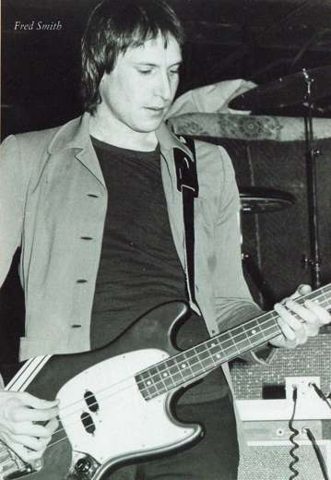
Fred Smith
It's amazing, I go out with other people on tour and it never fails that someone tells me, "I heard you when I was 13 and you changed my life."
One thing that happened when we got together at the end of ’90 and jammed, more than Tom or Richard’s guitar being there, was Billy’s hi-hat. The way he plays his hi-hat is unlike anything else. One day they’ll discover the Television sound is Bill’s hi-hat playing. The rest is superfluous.
For six years people were asking why we broke up, then they asked when we'd get back together. For the next six they'll ask why did we reform?
In some bands a bassist can relax back in the pocket with the drums but Tom likes the bass to be melodic, so I have to fit notes into some unusual places.
Blondie was like a boat that was sinking and Television was my favourite band.
I think most of the songs [on Marquee Moon] sounded pretty much like they sounded live – except in tune.
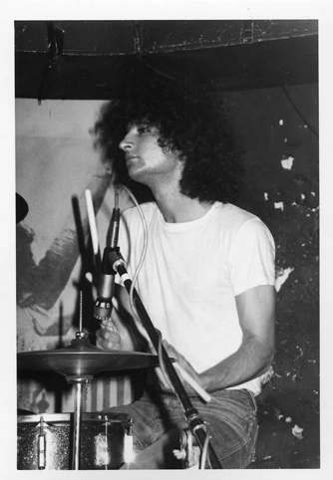
Billy Ficca
Alternative music doesn't have to be "alternative" [mock wincing facial gesture]. I mean, we COULD be weird and avant-garde if we wanted, but really, at our core is a pop band.
You can't yell and encourage an electronic drum track.
I guess you might say Tom does a lot of composing in the studio.
Others on Television
A few people said, "Don’t work with him, he’s difficult". But he’s an artist - and no more difficult than anybody who’s intelligent and doesn’t stand fools.
Fred Smith made the big error of his life when he quit Blondie to join Television, but at that point Television was the one tipped for big, big success. Blondie was the worst band in the city - they were just a joke.
People think that he takes himself too seriously, but he's one of the funniest guys I've ever met! He's a riot!
A lot of us took note from Richard Lloyd and Tom Verlaine. Those guys were game-changers.
Tom Verlaine. Television. Marquee Moon. Guitars and Grace and Danger. The Wonder.
This is a site which has emerged from my (let's be honest) obsession with the above. There must be a record in everyone's life which changes things. (If there isn't, then didn't you grow up with the radio on? Haven't you ever queued outside a record shop on a release date just so that you could get it first?)
Changes the way you think about things.
Marquee Moon changed the way I thought about music; about the way it was created, the way it was played and the way it sounded. Forget the way it should sound. In the UK, heavy rock and 'progressive' music were the order of the day. Nothing succeeds like excess. (OK, so there's nothing wrong with listening to people whose brains are all in their fingers, but you try listening to Emerson, Lake and Palmer without laughing.) In the US, anyone still left over from the 60s and early 70s seemed to be heading towards country. Living in London in 1975, nothing seemed more absurd or worthless than, say, The Eagles (actually, even now, nothing seems more absurd or worthless than The Eagles, but there you go).
I played the guitar. Not too well. I listened to Captain Beefheart, Ry Cooder, Peter Green, Hendrix and put the guitar away again. Wrong thing to do, of course, but everyone else was trying to play like someone else and, hell, it's hard to play "Big Eyed Beans From Venus" when you didn't write it and, really, what's the point?
I read about the New York music scene in English music papers. At least once a day I wished I lived there. I knew what was going on but I hadn't heard it. Then there was Marquee Moon. I heard "Elevation" on some late night TV programme and the next day I went out and found the album and that was that. It was like a new musical world, or the old one twisted inside out. It was energy and brains and power and beauty. It slashed a hole in the continental divide between Beefheart and the newly-emerging snarl of the Sex Pistols. I couldn't work out where it came from. It didn't seem to owe anything to anybody and, if it wore its influences at all, then most of them passed me by. My crappy old stereo just wouldn't go up loud enough to play it properly. Must be the grip of love.
It wasn't music that crept up on you. It didn't so much grab you as, well, make everything else irrelevant while it was there. It was clean and sharp and dirty and dense. And there was this open, untreated passionate whine of a voice; even when I could make out the lyrics there hardly seemed time to think about what they meant. Guitars slid through it and skidded around it and almost fell over it. It had beauty and attitude; it said, "Look at me!" and then it said, "Fuck off!" It felt as if it had always been there, complete, somewhere. Did somebody just make this up? Did somebody write this? Did somebody think it?
Forty-some years later I still get the same rush when I hear the first few bars of "See No Evil". There's are moments on every Television, Tom Verlaine and Richard Lloyd album that raise hairs on the back of my neck.
I still listen to all this music on vinyl, because I always have done. It sounds better. I don't want to get into an argument about this, but it does. Most of the unofficial Television/Verlaine stuff is only available on CD, but you have to take what you can get.
When I started this site, it wasn't intended to be the Ultimate Television Website. (Maybe some day, if my wife and children don't throw me out first...) It's not an attempt to tell you everything you ever wanted to know about Tom Verlaine, Richard Lloyd, Fred Smith and Billy Ficca. It's just an expression of how I feel about this brilliant noise. It's unashamedly positive (I seem to have mislaid my natural cynicism somewhere for the duration) and probably gushes a little too much here and there but, hey, it's my obsession so I don't care.
All the reviews and opinions here are mine (unless otherwise credited) so if you think I'm wrong about something, well... send me an alternative point of view.
It's growing, bit by bit. A lot of great work on the Discography and history was already done by Steve Rovner, in his Just The facts site, which has now become part of this site. You can find it here. I owe much in the way of research to Leo Casey, who is a much-tapped source of archived stuff about Television and who generously shared his treasures with me. Richard Lloyd has his own official website here, and Richard Hell's is here.
If, somehow, you got here by accident, read on and then do yourself a favour and go out and get some of this stuff. If it wasn't an accident then you already know what I'm talking about.
"You know it's all like some new kind of drug"...
Keith Allison
Love and Thanks to Tania for not complaining but hearing it too.
Thanks to Colin at Helter Skelter Records, Chichester UK
I'd also like to thank:
Leo Casey (archivist extraordinaire),
Howard Webb (for.. he knows what) ,
Steve Rovner,
Raymond Gorman,
Maurice Rickard (for this and that)